
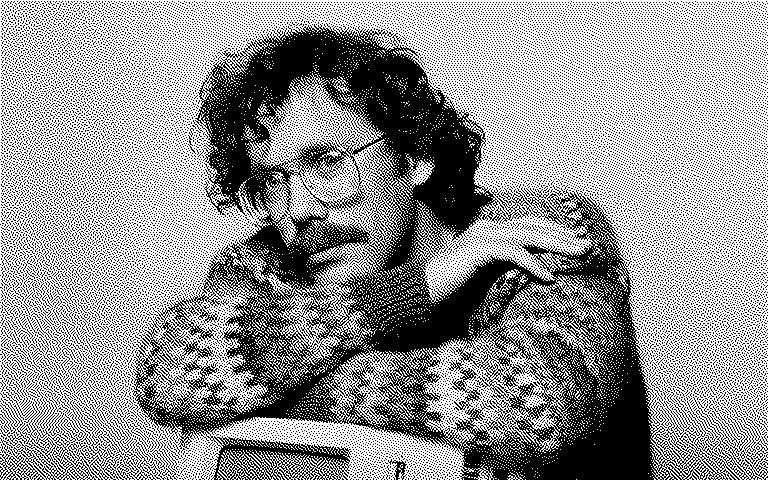
A legendary figure from Apple's early days and a critical team member for both the Lisa and Macintosh, Bill Atkinson didn't just build the first app for the Mac, he created the underlying technology that drew the GUI on the Lisa and Mac, turning what he'd seen demoed at Xerox PARC into an even better experience.
Atkinson was working on his PhD in neurochemistry when his former professor Jef Raskin invited him to visit Apple. In fact Steve Jobs had to turn on his famous charm to convince Atkinson to become employee 51 in 1978 well before Apple's IPO and just a year after the Apple II had been released. No sooner had the Apple II begun making Apple a lot of money, the company was already planning the next computer, in fact there were several new computers dreamed up in 1978. The Apple III and the Lisa. And Bill Atkinson found himself on the Lisa team.
On the Lisa team Atkinson was instrumental in developing the software that would give the Lisa its graphical user interface. The late 1979 tour of Xerox PARC that Jobs secured turned the Lisa from a computer for business (which is what the Apple III was also meant to do) into a super-powered GUI based business machine. And to do this, someone needed to write the underlying code to enable Jobs' vision. And so LisaGraf was born. But the Lisa project grew too large and too important for the company—especially following the failure of the Apple III—and so in September 1980 Jobs was kicked off the team. He soon found Raskin's $500 computer project codenamed "Macintosh" and he immediately saw the potential for a consumer friendly GUI appliance computer. And if it was going to have a GUI, it needed Atkinson. QuickDraw not only built on Atkinson's original work for the Lisa, it greatly improved the Macintosh's drawing engine and became a key technology baked into the Macintosh Toolbox—the base routines in the computer's ROM.
While many of the key people from the Macintosh left Apple soon after the 1984 launch or followed Steve Jobs out the door in 1985, Atkinson stayed on and created a "killer" application which he insisted Apple must include with every Macintosh for free—HyperCard. The application gave Macintosh a "software erector set" and it was the realization of Vannevar Bush's Memex concept and the hypertext concept. And it was designed for non-programmers to build their own interactive applications. It was the web before the web had been invented.
Atkinson also contributed to how the Macintosh would display images. Despite being considered low-resolution by today's standards, Macintosh's 9-inch 512x342 pixel screen with a 72-pt density was high-res in 1984. However it was a 1-bit black and white display—it couldn't even display greyscale images. Atkinson build on the existing Floyd-Steinberg dithering process to create the Atkinson Dithering algorithm which gave the early Macintosh the ability to display images just like the one above.